

Why We Verify Our Methodology
Environmental health interventions should never rely on assumptions, opinions, or visual cleanliness alone. Every recommendation within the PEPN-HEART™ framework is designed to be objectively measured, evaluated, and verified through environmental data.
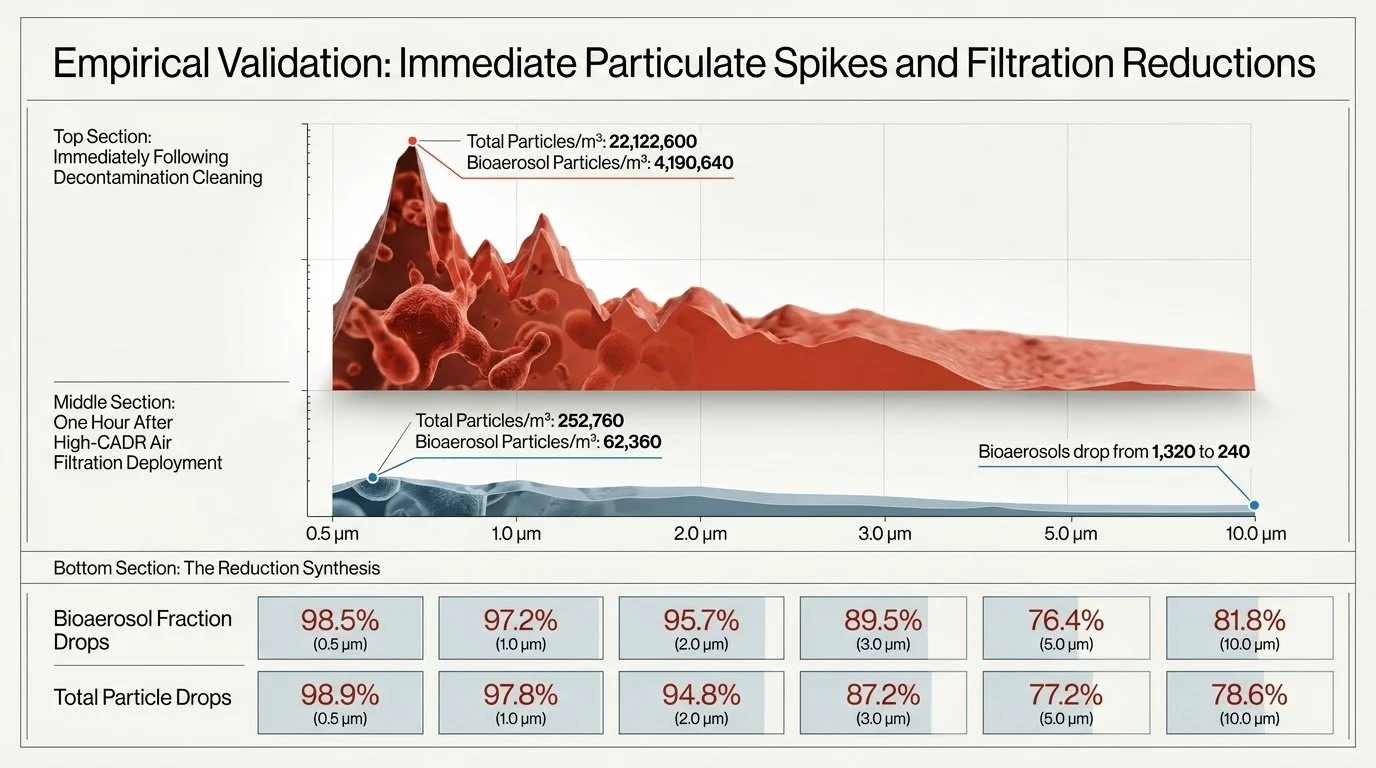
The Science Behind PEPN-HEART™ Verification
Evidence-Based Environmental Health Assessment
Traditional remediation has historically relied upon visual cleanliness, moisture correction, and limited post-remediation verification to determine project success. While these practices remain important, they do not fully evaluate whether biologically active exposure burdens have been meaningfully reduced throughout the indoor environment. Occupants often continue to experience symptoms even after projects are declared complete because microscopic biological reservoirs and exposure pathways frequently remain active and unmeasured.
The PEPN-HEART™ Protocol was developed to solve this problem by shifting the focus from structural restoration alone to measurable biological exposure reduction. Every phase of the methodology—from environmental assessment and biotoxicity profiling through intervention, fine particle cleaning, active air purification, verification, and long-term stabilization—is built around objective environmental evidence. Rather than asking whether a building simply "looks clean," PEPN-HEART™ asks whether the biological exposure burden has actually been reduced.
Throughout this course, students will learn how water damage creates complex environmental ecosystems consisting of fungi, bacteria, endotoxins, β-glucans, actinomycetes, microbial fragments, allergens, and ultrafine particulate matter. These contaminants become airborne through normal occupant activity, HVAC operation, and air movement, allowing biological exposures to extend far beyond areas of visible damage. Understanding these exposure dynamics fundamentally changes how environmental professionals assess buildings and evaluate remediation outcomes.
Students will learn how PEPN-HEART™ integrates environmental assessment, moisture investigation, laboratory testing, ATP hygiene verification, airflow analysis, particulate monitoring, ventilation performance, HVAC evaluation, and environmental biotoxicity profiling into a comprehensive framework for documenting exposure reduction. Every recommendation is supported by measurable environmental data rather than subjective interpretation or assumptions.
Unlike traditional verification methods that often rely on limited sampling or visual inspection, PEPN-HEART™ evaluates the indoor environment as an interconnected biological exposure system. Participants will learn how to establish environmental baselines, identify hidden reservoirs, characterize exposure pathways, implement targeted interventions, and objectively compare pre- and post-intervention environmental conditions to determine whether meaningful reductions in biological burden have been achieved.
Verification is more than a final inspection—it is the scientific process that demonstrates whether an intervention accomplished its intended objective. By combining environmental science, exposure assessment, laboratory analysis, and objective performance metrics, PEPN-HEART™ enables environmental professionals to validate their work with measurable evidence while providing clients with confidence that decisions are supported by data.
Why PEPN-HEART™ Is Different
PEPN-HEART™ was designed around a simple principle: environmental health claims should be supported by objective evidence. Instead of relying solely on visual observations or assumptions, professionals are taught to collect, interpret, and compare measurable environmental data before and after intervention. This evidence-based approach allows practitioners to document meaningful reductions in biological exposure burden and demonstrate the effectiveness of their work using scientific verification rather than opinion.
We believe environmental professionals should be able to answer one fundamental question with confidence: "Did the intervention measurably reduce the biological exposure burden?" PEPN-HEART™ provides the framework, methodology, and verification tools to answer that question using data.
Built on 40+ Years of Scientific Research
The PEPN-HEART™ framework integrates more than four decades of published scientific research and over 400 peer-reviewed references spanning environmental microbiology, aerosol science, exposure assessment, building science, environmental medicine, and public health.
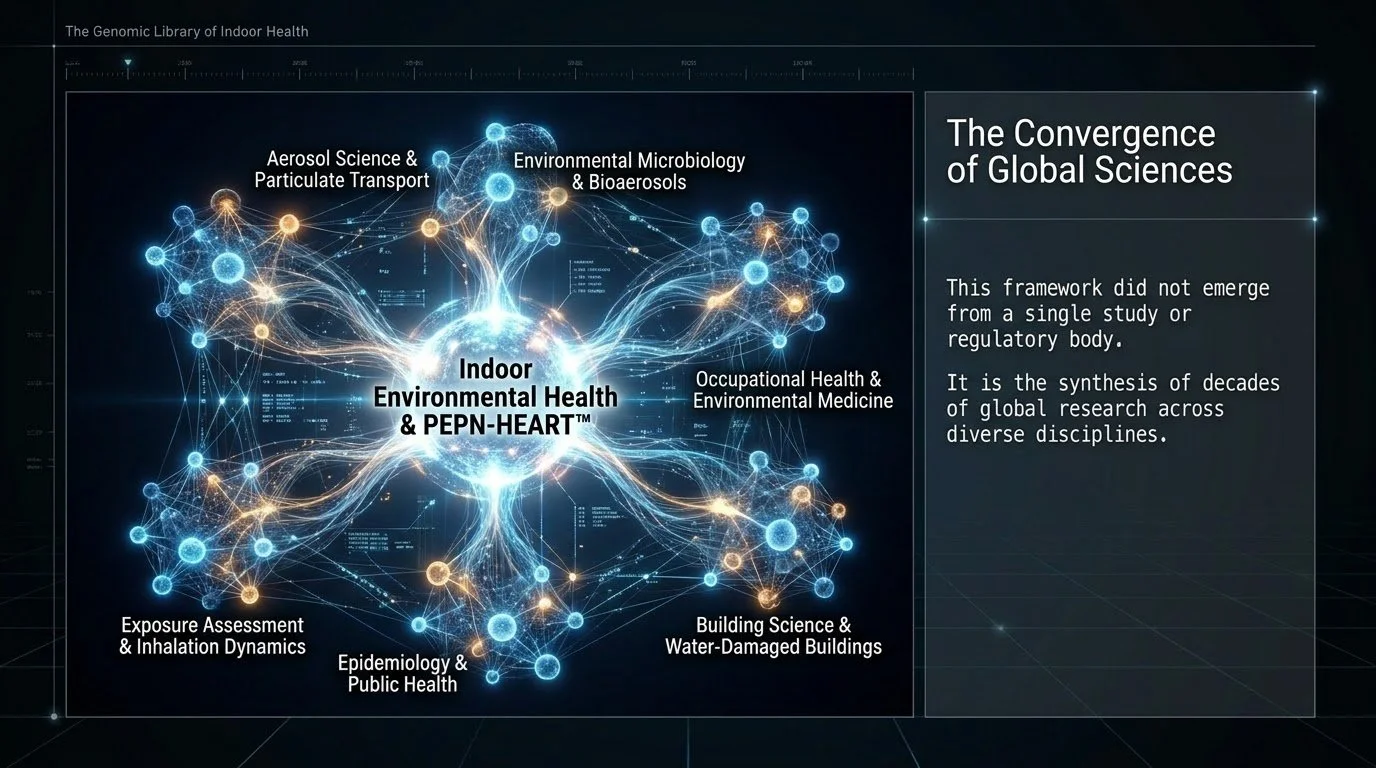
Built Upon 400+ Scientific Sources
The PEPN-HEART™ Protocol is a specialized scientific framework established to define environmental health intervention as an independent professional discipline. Unlike traditional remediation that focuses primarily on structural repairs, this system prioritizes the evaluation and reduction of inhalation-based biological hazards within occupied buildings.
Its foundation is built upon decades of interdisciplinary global research, integrating environmental microbiology, aerosol science, exposure assessment, inhalation dynamics, building science, occupational health, environmental medicine, epidemiology, and public health.
The PEPN-HEART™ framework utilizes objective environmental data to characterize biologically active exposure burdens and evaluate whether intervention efforts have meaningfully reduced exposure pathways within the built environment.
By emphasizing human exposure dynamics rather than simple structural defects, the framework addresses the complex relationship between moisture-driven microbial reservoirs, airborne particulate transport, environmental burden, and occupant susceptibility.
Collectively, more than 400 scientific references contribute to a comprehensive body of evidence supporting the transition from damage-focused remediation toward exposure-focused environmental health management.
Why Do We Care?
Understanding how indoor environments affect human health is the foundation of modern environmental assessment. Before we can effectively identify, reduce, and control environmental exposures, we must first understand why those exposures matter.
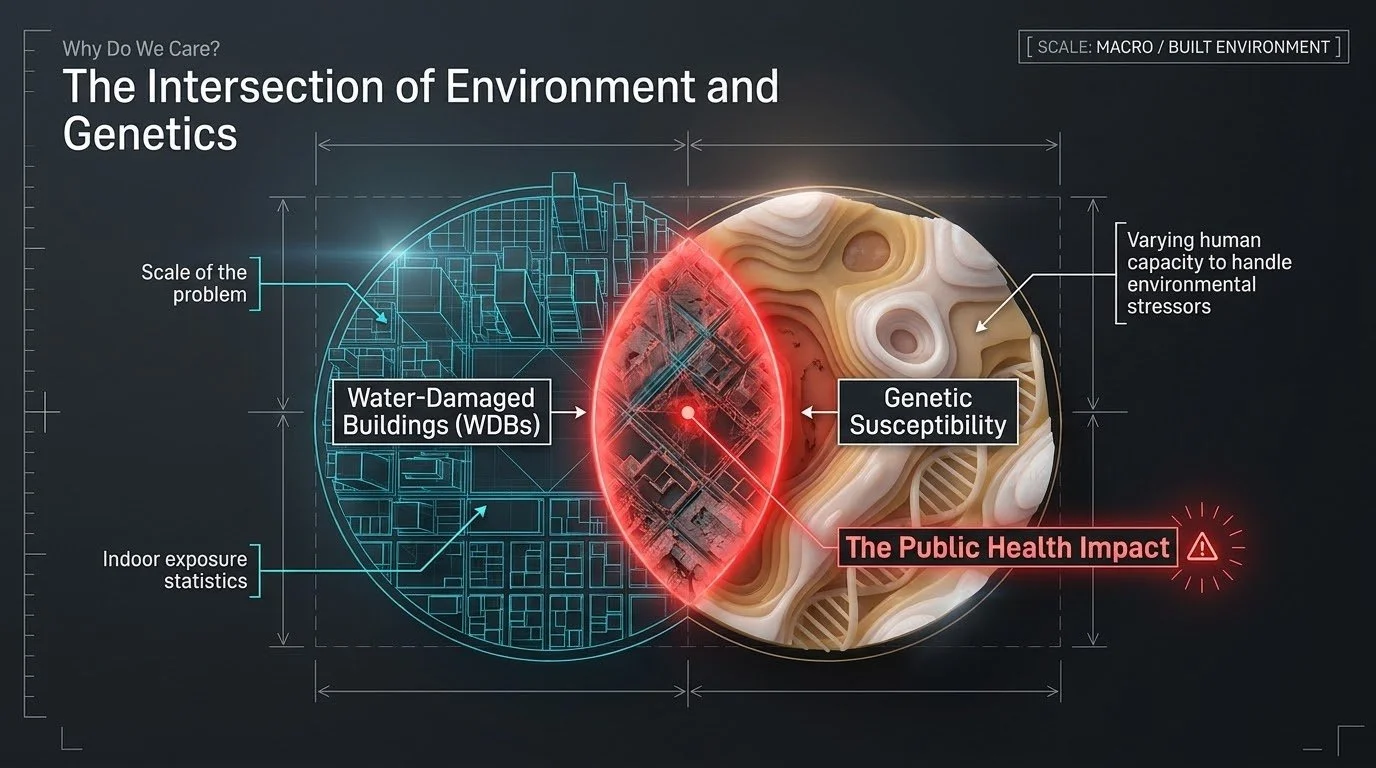
Medical Primer for Indoor Environmental Professionals
Presented by Allison Remy, PA-C
Environmental professionals are increasingly encountering occupants suffering from chronic, complex illnesses that may be influenced by their indoor environments. While environmental practitioners are not healthcare providers, understanding the biological basis of environmental illness is essential for making informed environmental decisions, communicating effectively with clients, and collaborating with medical professionals.
This comprehensive Medical Primer provides an evidence-based introduction to the biological mechanisms associated with environmentally acquired illness. Participants will learn how inhaled biological particles—including mold fragments, bacteria, endotoxins, β-glucans, microbial volatile compounds, and other immune-reactive contaminants—interact with the body's innate immune system and contribute to inflammatory responses in susceptible individuals. The course also introduces the current scientific understanding of biotoxin illness and Chronic Inflammatory Response Syndrome (CIRS), helping students appreciate why some occupants remain symptomatic long after visible damage has been removed.
Rather than teaching diagnosis or medical treatment, this module explains the science that connects building conditions with human exposure. Students will gain a deeper understanding of exposure pathways, particle behavior, immune activation, inflammation, susceptibility, and the relationship between environmental burden and occupant tolerance. This knowledge provides the scientific context needed to understand why moisture control, contamination reduction, ventilation, HVAC performance, fine particle cleaning, and environmental stabilization are critical components of protecting occupant health.
By understanding the "why" behind environmental interventions, indoor environmental professionals become better equipped to identify meaningful exposure risks, communicate findings with confidence, and perform assessments that align with the PEPN-HEART™ philosophy of exposure reduction. This foundational knowledge establishes a common language between environmental professionals and healthcare providers while reinforcing the environmental professional's role within an interdisciplinary approach to healthier indoor environments.
Topics Covered
Professional Scope
This course does not teach participants to diagnose, treat, or manage medical conditions. Instead, it provides environmental professionals with the scientific knowledge needed to understand how indoor environmental exposures influence human health, communicate more effectively with healthcare providers and clients, and apply the PEPN-HEART™ framework within the appropriate scope of environmental practice.

PEPN-HEART™ The Biological Exposure System
Environmental Health Assessment, Remediation & Exposure Pathways
The PEPN-HEART™ The Biological Exposure System Course is a comprehensive, evidence-based training program developed for indoor environmental professionals seeking a deeper understanding of how buildings influence human health. Unlike traditional remediation training that focuses primarily on structural damage and mold removal, PEPN-HEART™ examines the indoor environment through the lens of biological exposure, inhalation science, and environmental health. Students learn how moisture intrusion, microbial amplification, HVAC systems, airborne particles, dust reservoirs, ventilation, and occupant behavior interact to create complex exposure pathways that can influence the health of building occupants.
Beginning with the biological mechanisms of environmentally acquired illness, the course introduces the science behind inhalation exposure, immune activation, biotoxin illness, and Chronic Inflammatory Response Syndrome (CIRS). Participants develop a foundational understanding of why environmental exposures matter, how biological contaminants affect susceptible individuals, and why environmental professionals play an essential role in reducing exposure. While remaining entirely within the scope of environmental practice, students gain the scientific knowledge necessary to communicate more effectively with clients, physicians, industrial hygienists, and remediation professionals.
The curriculum then transitions into the practical application of environmental health assessment. Students learn systematic building investigations, moisture dynamics, exposure pathway identification, environmental stabilization, biotoxicity profiling, laboratory testing strategies, and the interpretation of environmental data. Rather than relying on isolated observations, participants learn to evaluate buildings as interconnected biological systems where air, surfaces, HVAC systems, reservoirs, and occupant activity continuously influence exposure.
Throughout the program, students explore advanced topics including HVAC system evaluation, airflow dynamics, filtration, ventilation, aerosol transport, fine particle cleaning, active air purification, and long-term building stabilization. The course explains why surface contamination and airborne contamination cannot be addressed independently, introducing evidence-based strategies designed to reduce biological burden throughout the entire indoor environment rather than treating isolated areas of contamination.
Real-world case studies demonstrate how environmental assessments evolve from initial inspection through laboratory testing, intervention planning, exposure reduction, verification, and long-term environmental management. Students learn how objective environmental data can be used to support recommendations, document environmental improvement, and provide a more comprehensive understanding of biological exposure than traditional remediation practices alone.
The course concludes by introducing the PEPN Governance Alliance, where participants learn the standards, ethics, documentation requirements, and quality assurance principles that support a consistent, evidence-based approach to environmental health. Together, these modules provide a complete framework for understanding, assessing, reducing, and managing biological exposure within the built environment while promoting healthier indoor spaces through measurable, science-driven environmental practices.
What You'll Learn
Designed for the Next Generation of Environmental Professionals
PEPN-HEART™ is designed for inspectors, indoor environmental professionals, remediators, HVAC professionals, restoration contractors, industrial hygienists, healthcare professionals, building scientists, and anyone seeking a comprehensive understanding of how buildings influence human health. By combining building science, environmental microbiology, aerosol science, exposure assessment, and evidence-based intervention strategies, the PEPN-HEART™ Foundations Course provides a modern framework for advancing the environmental health profession.